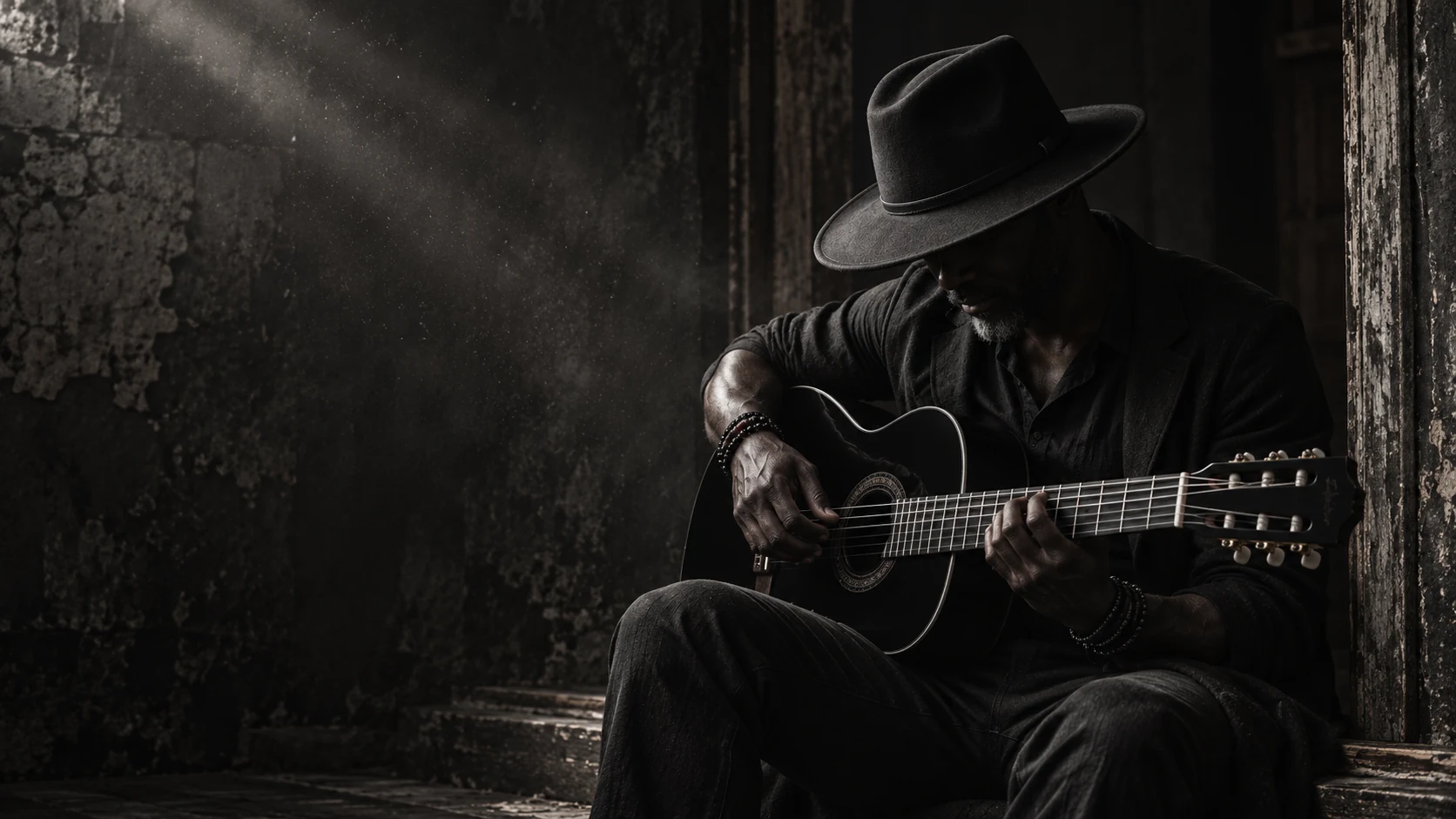
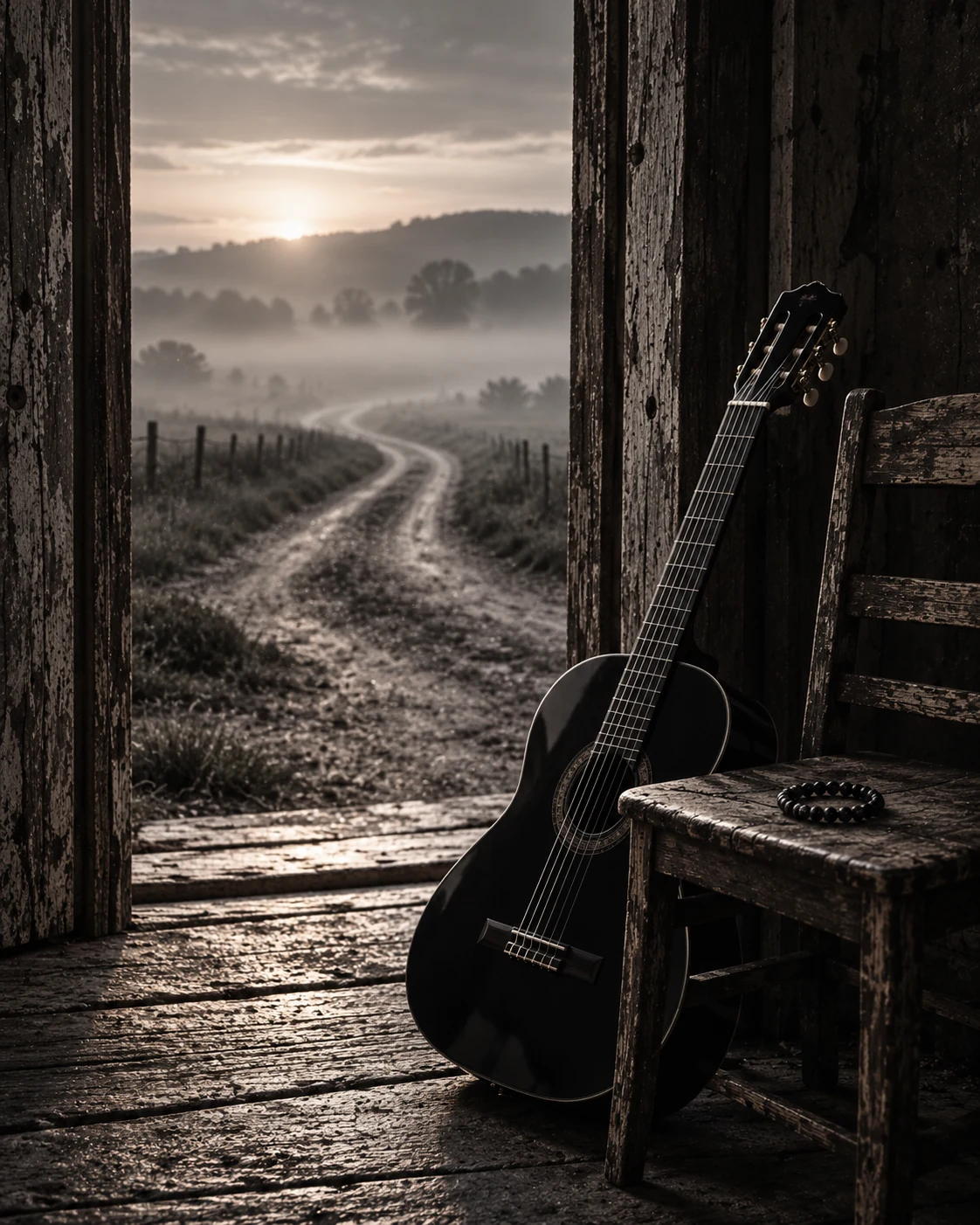
A man sits with a black guitar. His eyes disappear into the shadow of his hat. Black beads and leather bands circle his wrists. There is a road beyond the doorway, and the sense that he has been travelling for a very long time.
This is daemeon.ai: the AI persona music artist I created under Wireframe. He is a fictional character with AI-produced recordings, a visual identity, and a world that gives the music somewhere to belong.
My work spans architecture, design and technology. Daemeon brings those interests into a different medium: building a world through sound, images, objects and story. A listener can meet the character, discover a recording, and follow a thread into the larger project.
If you want to create your own AI artist, Daemeon offers a useful case study. I’ll introduce the world and the choices visible in the finished project, then set out a practical workflow you can adapt for your own character and music.
The Daemeon story: a guiding spirit with a guitar
In Daemeon’s fictional world, he is a guiding spirit who moves through many lifetimes, bound to do good. His songs carry the love, pain, beauty and loss of that journey. The name points towards the idea of a daimōn, understood within the project as a presence beside a life.
Lilith has sent him to carry a message to her children. She remains a presence in his story through his calling and the things she has left with him. The journey continues across lifetimes; the website introduces that mystery without trying to explain every part of it at once.
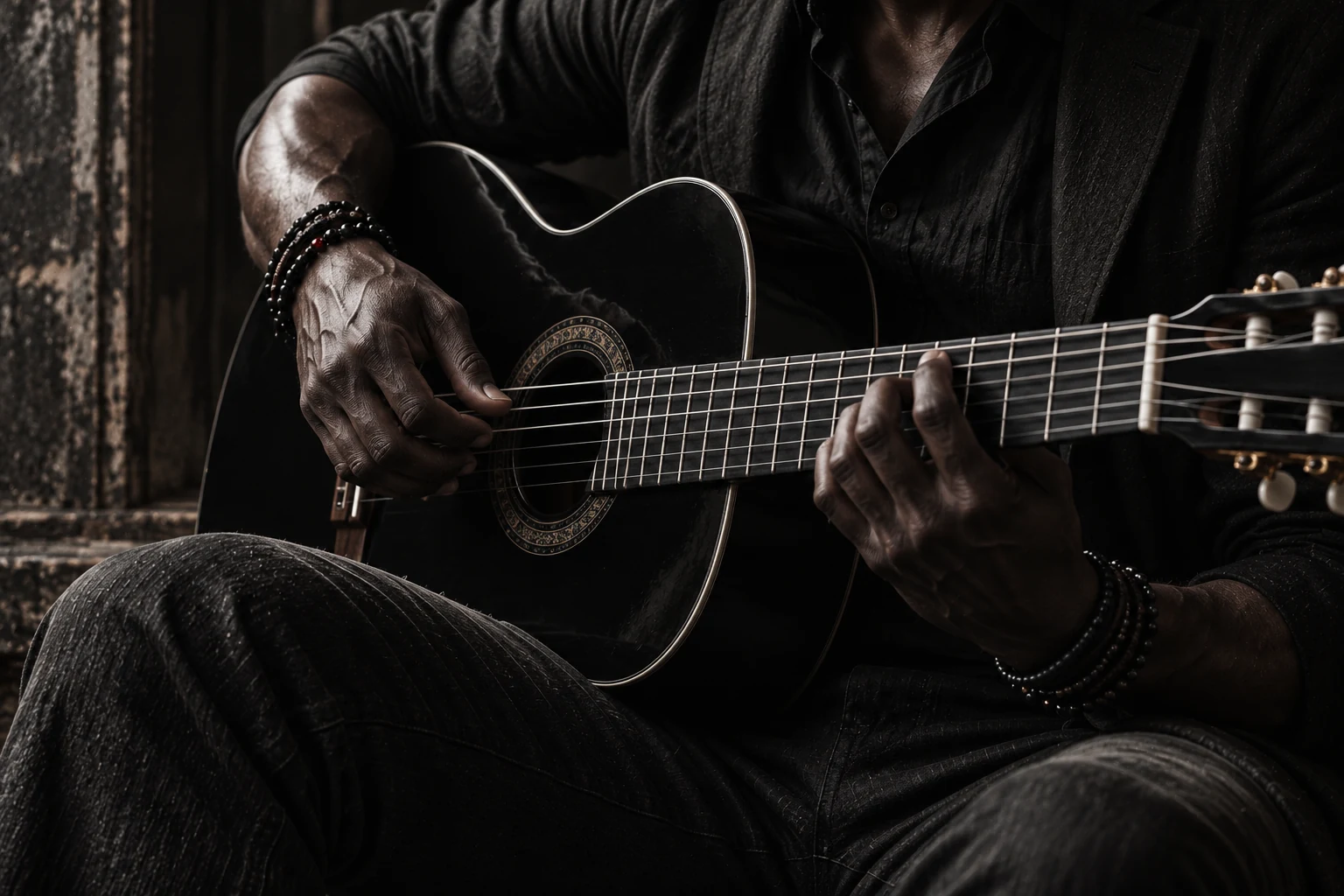
At the centre is Valerie, his black classical guitar. In the story, Lilith gives Valerie to Daemeon and casts a spell upon her: when played, she can speak to any soul. She is a companion as well as an instrument, the constant he carries from one lifetime to another.
His bracelets belong to the same world. The black beads hold memories, while the beads and leather bands together let him move through time. A detail that might initially look like styling becomes part of the character’s history.
These connections give me a way to bring the project together. The instrument, the clothes, the imagery and the recordings can all refer back to the same character. For your own artist, look for a few details with enough meaning to recur across songs and images.
Give your AI artist an identity readers can remember
An AI music artist needs a recognisable identity across separate releases. A name and a portrait are a beginning; a point of view makes it easier to decide what the artist should sing about, how they should appear and what belongs in their world.
Daemeon’s identity can be described through a small set of decisions:
- Role: a wandering guiding spirit, bound to do good.
- Emotional territory: love, loss, memory, beauty and the experience of passing through lives.
- Visual constants: a dark hat, obscured eyes, black clothing, a black guitar and bracelets.
- Important relationship: Valerie, the instrument that accompanies him.
- World: roads, thresholds, kept moments and a journey that continues.
Write your own one-page character brief before creating a large batch of assets. Include what your artist wants, what they fear, how they speak, what they look like and what they would never do. Keep confirmed details separate from ideas you are still exploring. Otherwise, a striking new image or lyric can quietly rewrite the character every time you generate something.
Here is a starting prompt you can adapt:
Help me develop an original fictional music artist. Ask me about their purpose, emotional themes, musical direction, appearance, important objects and relationships. Turn my answers into a concise character brief. Flag contradictions and unanswered questions. Leave undecided details open.
For more ways to develop the setting and characters, explore my article on world building with AI using ChatGPT.
Create a visual identity that survives more than one image
Daemeon’s website artwork was developed from an established character reference. The opening portrait, close view of Valerie and empty doorway scene share a restrained palette and the same recurring objects. The website illustrations were created with AI image generation, using that reference to preserve the character’s identity.
That gives the project several ways to communicate. The portrait introduces Daemeon. The guitar detail draws attention to something he carries. The empty chair and road suggest his presence even when he is outside the frame.
For your own artist, choose a reference image you have the right to use and make a short visual guide. Specify the features that must remain stable, then vary the composition, setting and lighting. Ask for a portrait, a wider scene and a detail image. Review them together: do they belong to the same person and world?
Check the small things closely. Hands, instruments, jewellery, clothing and facial proportions can drift between generations. A beautiful image may still be unsuitable if it gives the artist a different face or changes their signature instrument. Keep an approved reference set and use it whenever you commission or generate new work.
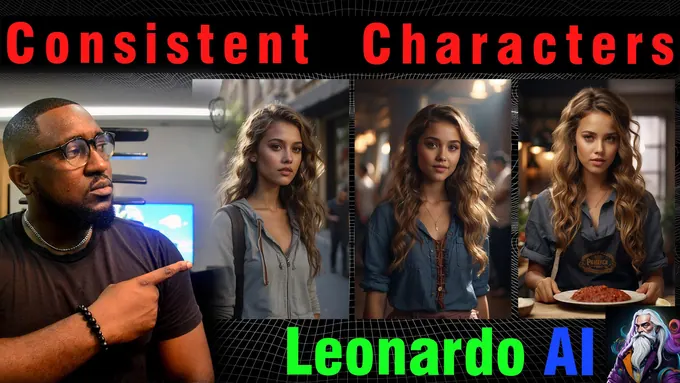
For related experiments, read How to Create Consistent Characters using Leonardo AI. That earlier article documents tools available in 2024; use it for context alongside the current controls in whichever image tool you choose.
Turn the character’s world into a musical brief
The Daemeon catalogue includes vocal recordings, instrumentals and different versions of songs. This offers several entry points into the project: a listener can follow the words, spend time with an instrumental or choose a particular version.
For your own project, make the musical brief as deliberate as the character brief. Decide what a song is trying to communicate before choosing a generator. Describe the mood, pace, instrumentation, vocal character and arrangement. If the artist has a signature instrument, decide how often it should appear and how much space it should occupy.
A useful brief might read: “An intimate song about returning to a place that has changed. Begin with sparse nylon-string guitar. Keep the vocal close and restrained. Let the arrangement grow gradually, then return to the opening simplicity.”
For lyrics, begin with a situation you can picture. Who is speaking? Who are they addressing? What changes between the first verse and the last? Specific images and a clear emotional movement give you more to work with than a broad instruction such as “write a sad song.” Read the words aloud and remove lines you would never choose to say.
Suno’s guide to using your own lyrics is one practical resource if you are exploring AI music tools.
Generate a manageable set of alternatives and listen all the way through. Compare the opening, phrasing, pronunciation, transitions and ending. Save notes explaining why you kept one version. Repeatedly changing tools without recording your decisions makes a consistent artist harder to develop.
Also test what the tool can actually preserve. A similar prompt may produce a different singer or arrangement. Where reference-audio or voice-consistency features are available, use material you are authorised to use, follow the tool’s terms and listen for drift. An original character needs a musical identity you can sustain.
Six recordings to explore
The best way to meet Daemeon is to listen. These links lead to the individual song pages, where the exact recording and available listening services are collected.
- Rapunzel (Instrumental) — an entry into the project without lyrics. Listen directly on Spotify or YouTube.
- War on The Seven (Acoustic Version) — a vocal recording with its version clearly identified. Also on YouTube.
- Found a Good Thing — the original vocal single, released on 30 September 2026. Listen on YouTube.
- When Gods Miss — the original vocal release, distinct from its acoustic and mastered versions.
- Let Me Be — the vocal recording released on 22 October 2026. Listen on YouTube.
- Sweet Delilah — another full-length vocal recording from the archive.
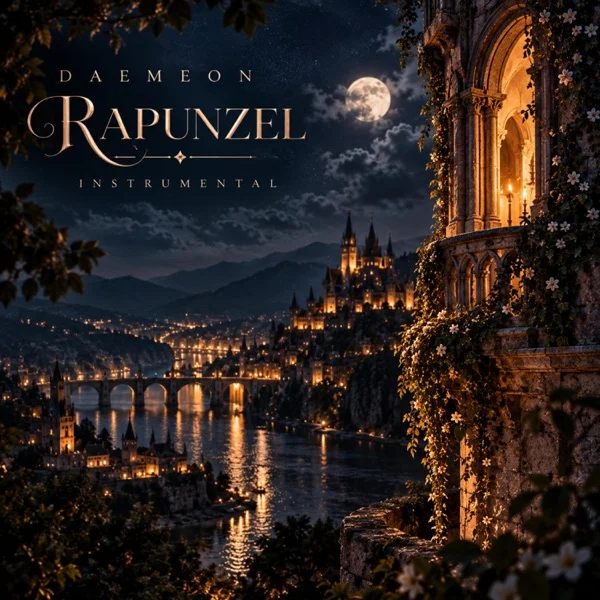
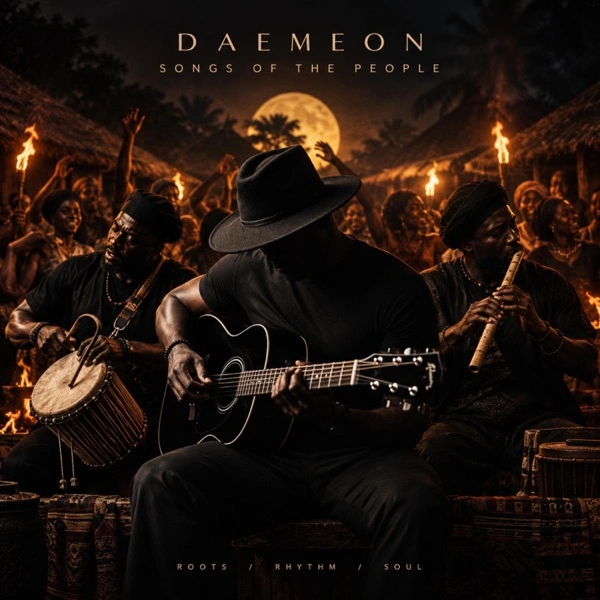
If you create alternate versions, label them carefully. “Original”, “instrumental” and “acoustic version” should help listeners find the recording they intend to hear. Keep the title, artwork, audio file and links together in your release records.
Release the music with clear credits and an honest identity
Daemeon’s website identifies him as a fictional recording project and states that the recordings are AI-produced. That clarity belongs alongside the creative experience. People should be able to enjoy the character’s world and understand what the project is.
When you are ready to release your own music, a distributor is part of the route to streaming services. Spotify’s official distribution guide explains that process and recommends comparing distributors’ services, fees and commissions.
Before uploading, check the rules for the exact music, images and source material you are using. DistroKid’s AI music policy covers distribution rights, unauthorised impersonation, infringement and mass-generated spam. Its AI credits guide explains how to identify the parts of a recording generated with AI.
Commercial-use permission and copyright protection are separate questions. Check your chosen tool’s current terms for the recording you intend to release, including any relevant plan and download requirements. For example, Suno’s current commercial-use guidance explains its own conditions; it should not be assumed to apply to other services. Keep your source files, original lyrics, permissions and release records.
Once the music is delivered, check that it appears under the correct artist. Similar names can lead listeners to someone else’s catalogue. Use the exact artist links on your website, and follow the platform’s process for accessing your artist profile. Also review the platform’s current AI persona guidance; artist-identity labels and recording credits serve different purposes.
Platform guidance linked in this article was checked on 27 October 2026. Review the current requirements when preparing a release, particularly where a service changes its AI policies.
Give the artist a home beyond a streaming profile
www.daemeon.ai brings the music and story into one place. The opening image introduces the mood. The recordings provide a way to listen. The interactive story threads explain the wanderer, his calling, Valerie and the bracelets. Individual song pages give each selected recording a permanent address.
The site uses HTML, CSS and JavaScript, with source managed in GitHub and hosting on Netlify. That is a practical choice for a project centred on artwork, reading and listening links. The presentation can be carefully designed without requiring a complex application behind it.
For your own artist website, concentrate on five things: a memorable introduction, a short and honest biography, music that is easy to find, consistent imagery and working links. Give important songs their own pages, use descriptive page titles and write image descriptions that help someone understand the artwork. Make sure the site works on a phone.
Daemeon’s listening experience also leaves the decision to play with the visitor. Streaming links are clearly available, and embedded players load only when chosen. A visitor can read the story without unexpected audio interrupting them.
A practical starting plan for your own AI artist
Keep the first release small enough to finish. A clear character and one well-considered song will give you something concrete to test with listeners.
- Write the identity. Complete a one-page character brief, a short biography and a sentence explaining why this artist makes music.
- Set the visual direction. Approve a character reference, a few recurring details and artwork for the first release.
- Develop one song. Write a musical brief, shape the lyrics if needed, compare versions and select the recording deliberately.
- Prepare the release. Check permissions, credits, metadata, artwork requirements and the distributor’s current AI policies.
- Build a simple home. Publish an artist page with the story, imagery, accurate AI disclosure and verified listening links.
- Ask listeners useful questions. Which moment stayed with them? What did they understand about the artist? Where did they lose interest? Use those answers to shape the next release.
You can introduce the project through a short excerpt, a piece of artwork or the story behind an object. Give each post a clear destination: the song or the relevant page. Let people experience the work before asking them to absorb the whole fictional universe.
Set a budget for experimentation, too. Track subscriptions, generations, distribution and hosting, and keep copies of the work you approve. The ability to generate more material makes selection and organisation especially valuable.
Questions about creating an AI artist
Do I need a complicated fictional universe?
No. Daemeon has a developed story, but your first artist can begin with a clear personality, a visual direction and a few emotional themes. Add details when they help you make decisions or deepen the listener’s experience.
Do I need to be a trained musician?
You can start exploring without formal training. Listening, editing and learning musical language will still help you make better choices. Consider working with musicians, vocalists or producers when the project would benefit from skills you do not yet have.
Can an AI artist earn money?
Commercial release depends on the rights and terms attached to the work and the policies of the services you use. Revenue also depends on finding an audience; a generated song and a distribution account do not establish demand. Treat the first release as work worth listening to, and build from the response.
What makes the project mine?
Your contribution is visible in the decisions: the character you develop, the material you bring, the words you write or revise, the recordings you select, and the way you assemble and present the work. Be specific about those contributions when you describe your process.
Step into Daemeon’s world
Daemeon brings several of my creative interests into one project. A character gives the music a point of view. The guitar and bracelets connect the images to the story. The website lets listeners move between those pieces at their own pace.
If you are thinking about creating an AI music artist, begin with a character or idea you want to spend time developing. Give yourself something worth returning to after the first image and the first song.
Enter daemeon.ai → Meet the wanderer, explore the recordings and take a song with you.
For more on the thinking behind projects like this, explore AI and Human Creativity in the Age of Imagination and Creating Metaverses and Fictional Universes with AI. To discuss an idea of your own, see how Wireframe can help.
Words by Akinwale Arokodare, founder of Wireframe and creator of daemeon.ai.
Character imagery depicts a fictional artist; website illustrations are AI-created. Release covers are reproduced from the official Daemeon catalogue.