Hey there! So, you’ve recently had that “a-ha” moment where you realized you possess a creative spark. I know that feeling all too well — trust me, your head must be swirling with a mix of excitement and questions.
That’s completely natural. Let’s dive into the whirlwind of emotions and challenges that typically accompany this transformative realization.
Imagine living a life without fully grasping your unique talents, strengths, and even your vulnerabilities. Then, suddenly, circumstances converge, and you begin to see the outlines of your abilities in clearer focus.
This revelation hits hard — regardless of your age. Whether you’re 25, 35, 45, or even 60, the impact of recognizing your creativity is profound. Our individual timelines and stories might differ, but the journey is equally powerful.
For me, this awakening arrived around the tumultuous year of 2021, during the COVID era. It’s fascinating how such realizations can stem from hitting rock bottom, facing a life-threatening situation, or navigating significant life changes.
Let’s talk about one of the initial emotions that accompanies this revelation — grief. “Why grief?” you may wonder. Consider this: before this creative epiphany, you were essentially living a life without acknowledging this vital aspect of yourself.
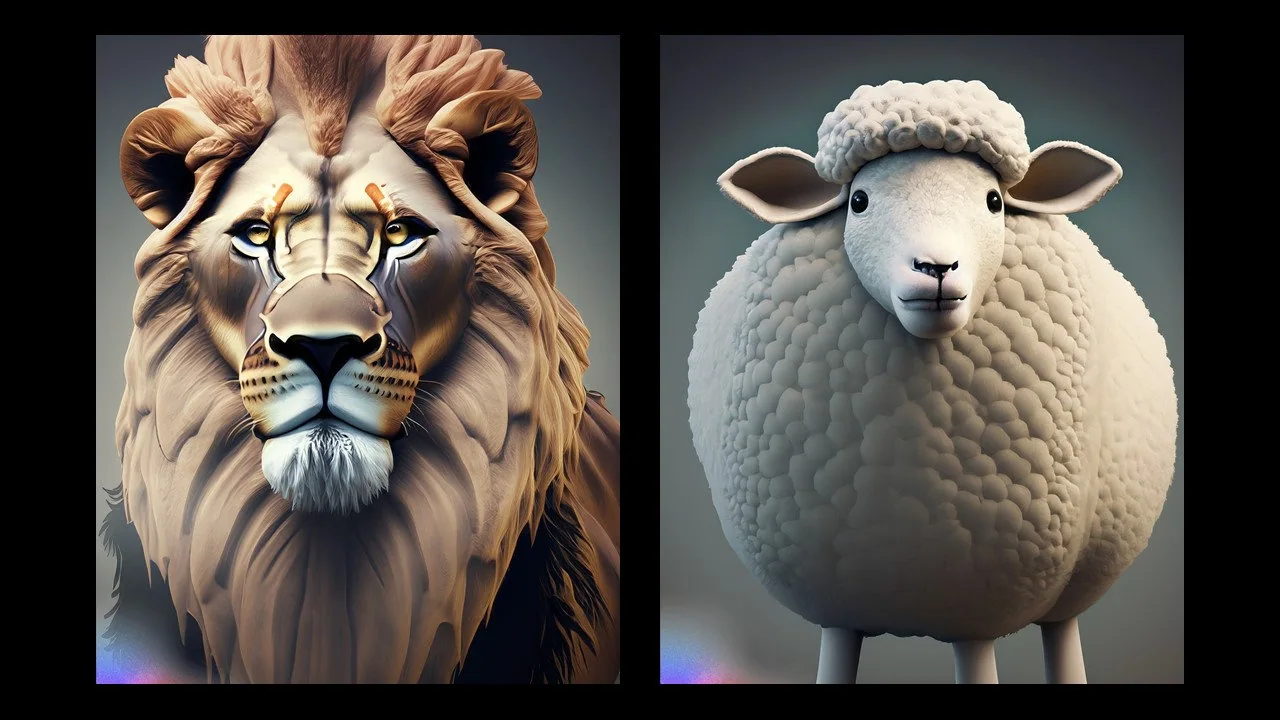
Picture a lion pretending to be a sheep. The words of Steve Jobs resonate here: “Your time is limited, don’t waste it living someone else’s life.”
But, as the lion discovers its true identity, it doesn’t immediately start roaring and prowling. Instead, there’s a roller coaster of emotions — surprise, confusion, shock, and above all, grief. It’s not uncommon for this phase to catch you off guard.
You might think that once you recognize your creativity, you’d jump into your creative journey with enthusiasm. However, the transition from a consumer mindset to a creator’s mindset isn’t as smooth as it seems.
Your ideologies, personality, and even your relationships might experience shifts.
I can relate — I used to be a people-pleaser until I embraced my role as a creator. This transition triggers changes on multiple fronts — physical, emotional, and more. It’s a mixture of fear and beauty, bitterness and sweetness — a compelling start to a new chapter.
Embracing Grief
Grief can be a useful metaphor for parts of personal change. I draw here on the familiar five-stage model associated with Elisabeth Kübler-Ross: denial, anger, bargaining, depression and acceptance. I am using it to organise these reflections, not to prescribe a fixed sequence that every creative person experiences.
Denial Stage
During the Denial Stage, you start questioning past decisions and moments when you bypassed opportunities to express your creativity. You might find yourself revisiting old photos — singing on stage, playing the guitar, painting — activities that once defined you. It’s natural to ask what went wrong, why you didn’t chase your dreams, and why you sidelined what you were naturally gifted at. These questions are valid. But instead of placing blame, focus on taking full ownership of your choices and forging a new path.
Anger
Anger may be part of the experience. You might feel frustrated with yourself or with people whose expectations influenced your choices. Try to acknowledge that feeling without turning it into blame or harm.
Bargaining
Bargaining, in this personal analogy, can look like trying to keep familiar routines while making room for a creative life. You might feel pulled between a job that pays the bills and work that feels more meaningful. Small, considered changes can offer a way to explore that tension.
Depression
Sadness may also surface when thinking about past choices and missed opportunities. In this reflection I am describing an emotional experience, rather than diagnosing clinical depression. If low mood persists or affects everyday life, it is worth seeking support from a qualified mental health professional.
These feelings may overlap, recur or never appear at all; everyone’s experience is different.
Acceptance
Acceptance, for me, means looking ahead with intention. Positive self-talk can help: it is okay to move forward, even though you cannot change the past. That understanding can support a deeper connection with yourself.
Navigating the Path Forward
So, what comes next? Uncertainty and the unknown. It might sound daunting, but here’s a quote by Mary Jane Oliver: “Uncertainty and the unknown are the raw materials for the artist.” Yes, you’re an artist, a creator. Embrace the void, get comfortable with the uncharted territories.
Forge a path — it’s yours to create.
Words by Akinwale Arokodare.
Explore more perspectives from Creative Practice.